
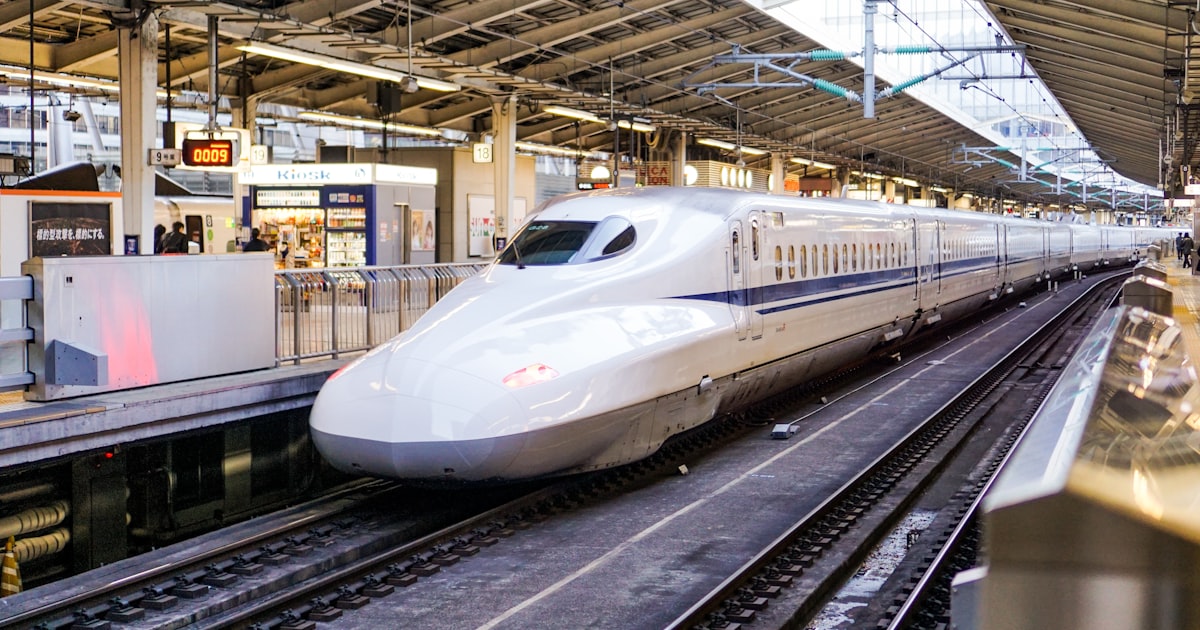
Japanese railways do not simply stop when a typhoon arrives — they follow specific wind speed thresholds that trigger suspension. The Shinkansen, in particular, announces planned suspension the evening before, giving you time to act. Understanding how this works is the difference between being stuck at a remote station and getting ahead of the disruption.
Shinkansen vs local trains — different thresholds, different timing
| Type | Suspension trigger | When announced |
|---|---|---|
| Shinkansen | Max instantaneous wind ≥ **30 m/s** | Previous evening (planned suspension) |
| JR local / regional | Max instantaneous wind ≥ **25 m/s** (varies by section) | Day-of, sometimes sudden |
| Private railways (私鉄) | Each company's own threshold | Often faster to suspend than JR |
| Subway | More wind-resistant | Lines with above-ground sections are affected |
The planned suspension (計画運休, keikaku unkyuu)
Japan's most important typhoon railway concept for travelers: when a major typhoon is forecast, JR operators announce planned suspension the evening before, typically between 6–10 PM. This is not a sudden breakdown — it is a deliberate, pre-announced shutdown.
This means you have time — if you check the previous evening. If your Shinkansen is the next morning and a typhoon is approaching, check JR's official channels by 9 PM the night before.
Where to check service status — in English
JR official websites
- JR East (Tohoku, Hokuriku, Joetsu Shinkansen; Tokyo area locals): jreast.co.jp/e/traininfo/
- JR Central (Tokaido Shinkansen — Tokyo ↔ Osaka ↔ Nagoya): jr-central.co.jp/en/
- JR West (Sanyo Shinkansen; Kansai and western Japan): westjr.co.jp
- JR Kyushu (Kyushu Shinkansen): jrkyushu.co.jp
Apps that work in English
- Google Maps — enter your route in transit mode; suspended lines show in real time and Google reroutes automatically
- Navitime for Japan Travel — English app with real-time disruption alerts across all JR and private lines
- JR East app — English available; push notifications for planned suspension announcements
One practical tip at the station
If you need to ask staff at the ticket counter, showing your destination on a map app is universally understood. Station staff in major cities often have basic English or can use a tablet translation tool. Showing them your ticket and the word "refund" or "change" alongside pointing to your ticket is usually enough to get started.
What to do before service is suspended
The best outcome is avoiding being stranded altogether.
- Check the previous evening — if a planned suspension is announced for your travel day, act immediately to adjust
- Move your departure earlier — aim to complete your journey at least 3–4 hours before typhoon landfall; trains stop before the typhoon arrives, not after
- Find nearby accommodation — search for hotels at your current or intermediate location in case you cannot complete the journey
- Stock supplies — if you might be waiting at a station or hotel for a day, buy water and food from a convenience store beforehand; stock runs out fast
- Expect crowds on resumption — the first trains after suspension reopens are very crowded; if your schedule allows, waiting a few hours after resumption is more comfortable
Shinkansen ticket refunds — what you are entitled to
When JR officially suspends service, your ticket is fully refundable with no cancellation fee.
| How you bought the ticket | How to get a refund |
|---|---|
| At a JR ticket window (みどりの窓口) | Go to any JR ticket window — valid for one year from the date of purchase |
| IC card (Suica, ICOCA) linked reservation | JR ticket window |
| Online / JR app (EX Reservation, etc.) | Cancel within the app or website |
| JR Pass seat reservation | Cancel the reservation and rebook later (see below) |
Refund condition: JR must have officially announced the suspension. Keep the JR suspension announcement screenshot — some ticket windows ask to see it.
JR Pass holders — important note
The JR Pass itself is not refundable. However, seat reservations made with your Pass can be cancelled and rebooked at no charge when JR suspends service. If the suspension extends beyond your Pass validity period, bring it to a JR ticket window and ask about a validity extension — this is available in documented force majeure situations.
Stranded at a station — what to do
Local and private railway suspensions often happen same-day without advance notice. If you are already at or en route to a station when suspension is announced:
- Stay inside the station or a nearby building — do not attempt to walk long distances during an active typhoon
- Station waiting areas stay open — most JR and private railway stations keep their concourses and waiting areas open for stranded passengers during typhoon shutdowns
- Set an alert — Google Maps and Navitime can notify you when a specific line resumes service
- Get a delay certificate (遅延証明書) — available at the ticket window or from an automated machine at the station; needed for travel insurance claims if you incur additional costs
Alternative transport options
When all trains are stopped, your remaining options narrow quickly.
| Option | Advantage | Caution |
|---|---|---|
| Highway bus | Cheaper than rebooking Shinkansen | Also suspended during direct typhoon hits |
| Taxi | Useful for short hops between nearby stations or hotels | Hard to find during a typhoon; surge pricing common |
| Rental car | Flexible | Dangerous in typhoon winds; most rental companies advise against driving |
| **Wait at current location** | **Safest and often cheapest** | Extra hotel night — claim via travel insurance |
Typhoons in Japan typically pass within 24–48 hours. In most cases, waiting is the right call — especially if rushing to an alternative means being on the road during the storm itself.
Three-part action checklist
The evening before (if typhoon is forecast)
- Check JR's official site for your Shinkansen route — planned suspension announced by 9–10 PM
- Set up route alerts in Google Maps or Navitime for your journey
- Identify a hotel near your current location in case overnight stay is needed
Morning of travel
- Final status check on JR app before leaving for the station
- If service is running: aim to complete journey 3–4 hours before typhoon landfall
- Buy water and snacks before heading out — stations and convenience stores near stations run out
If service is suspended
- Go to the JR ticket window to process refund or rebooking — ask for "refund" or "change" with your ticket visible
- If staying overnight: get a delay certificate (遅延証明書) from the ticket window or machine
- File a claim with your travel insurer for any additional accommodation expenses
- Set a resumption alert and wait — there is no faster option
General guidance based on JR operating rules. Actual suspension thresholds and refund conditions vary by operator and specific typhoon situation — always verify with the relevant railway's official channels.
Related guides